

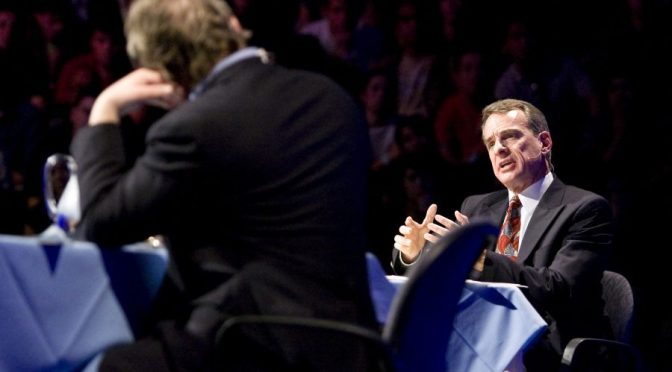
This is my favorite debate on the resurrection.
You can watch the debate here:
There is not much snark in this summary, because Crossley is a solid scholar, and very fair with the evidence.
SUMMARY
William Lane Craig’s opening speech
Two contentions:
- There are four minimal facts that are accepted by most historians
- The best explanation of the four minimal facts is that God raised Jesus from the dead
Contention 1 of 2:
Fact 1: The burial
- The burial is multiply attested
- The burial is based on the early source material that Mark used for his gospel
- Scholars date this Markan source to within 10 years of the crucifixion
- The burial is also in the early passage in 1 Cor 15:3-8
- So you have 5 sources, some of which are very early
- The burial is credited to a member of the Sanhedrin
- the burial is probable because shows an enemy of the church doing right
- this makes it unlikely to to be an invention
Fact 2: The empty tomb
- The burial story supports the empty tomb
- the site of Jesus’ grave was known
- the disciples could not proclaim a resurrection if the body were still in it
- the antagonists to the early Christians could have produced the body
- The empty tomb is multiple attested
- it’s mentioned explicitly in Mark
- it’s in the separate sources used by Matthew and John
- it’s in the early sermons documented in Acts
- it’s implied by 1 Cor 15:3-8, because resurrection requires that the body is missing
- The empty tomb was discovered by women
- the testimony of women of women was not normally allowed in courts of law
- if this story was being made up, they would have chosen male disciples
- The empty tomb discover lacks legendary embellishment
- there is no theological or apologetical reflection on the meaning of the tomb
- The early Jewish response implies that the tomb was empty
- the response was that the disciples stole the body
- that requires that the tomb was found empty
Fact 3: The appearances to individuals and groups, some of the them hostile
- The list of appearances is in 1 Cor 15:3-8
- this material is extremely early, withing 1-3 years after the cross
- James, the brother of Jesus, was not a believer when he got his appearance
- Paul was hostile to the early church when he got his appearance
- Specific appearances are multiply attested
- Peter: attested by Luke and Paul
- The twelve: attested by Luke, John and Paul
- The women: attested by Matthew and John
Fact 4: The early belief in the resurrection emerged in a hostile environment
- There was no background belief in a dying Messiah
- There was no background belief in a single person resurrecting before the general resurrection of all of the righteous at the end of the age
- The disciples were willing to die for their belief in the resurrection of Jesus
- The resurrection is the best explanation for the transformation of the disciples from frightened to reckless of death
Contention 2 of 2:
- The resurrection is the best explanation because it passes C.B. McCullough’s six tests for historical explanations
- None of the naturalistic explanations accounts for the minimal facts as well as the resurrection
James Crossley’s opening speech
Appeals to the majority of scholars doesn’t prove anything
- the majority of people in the west are Christians so of course there are a majority of scholars that support the resurrection
- there are Christian schools where denial of the resurrection can result in termination
The best early sources (1 Cor 15:3-8 and Mark) are not that good
1 Cor 15:3-8 doesn’t support the empty tomb
- verse 4 probably does imply a bodily resurrection
- the passage does have eyewitnesses to appearances of Jesus
- but there are no eyewitnesses to the empty tomb in this source
- appearances occur in other cultures in different times and places
- Jesus viewed himself as a martyr
- his followers may have had hallucinations
Mark 16:1-8
- Mark is dated to the late 30s and early 40s
- The women who discover the tomb tell no one about the empty tomb
The gospels show signs of having things added to them
- Jewish story telling practices allowed the teller to make things up to enhance their hero
- one example of this would be the story of the earthquake and the people coming out of their graves
- that story isn’t in Mark, nor any external sources like Josephus
- if there really was a mass resurrection, where are these people today?
- so this passage in Matthew clearly shows that at least some parts of the New Testament could involve
- what about the contradiction between the women tell NO ONE and yet other people show up at the empty tomb
- the story about Jesus commissioning the early church to evangelize Gentiles was probably added
- there are also discrepancies in the timing of events and appearances
- why are there explicit statements of high Christology in John, but not in the earlier sources?
William Lane Craig’s first rebuttal
Crossley’s response to the burial: he accepts it
Crossley’s response to the empty tomb: he thinks it was made up
- rabbinical stories are not comparable to the gospel accounts
- the rabbinical stories are just anecdotal creative story-telling
- the gospels are ancient biographies – the genre is completely different
- the rabbinic miracle stories are recorded much later than the gospels
- the rabbi’s legal and moral ideas were written down right away
- the miracle stories were written down a century or two later
- in contrast, the miracle stories about Jesus are in the earliest sources, like Mark
- the rabbinical stories are intended as entertainment, not history
- the gospels are intended as biography
- just because there are some legendary/apocalyptic elements in Matthew, it doesn’t undermine things like the crucfixion that are historically accurate
Crossley’s response to the evidence for the empty tomb:
- no response to the burial
- the empty tomb cannot be made up, it was implied by Paul early on
- the women wouldn’t have said nothing forever – they eventually talked after they arrived to where the disciples were
- no response to the lack of embellishment
- no response to the early Jewish polemic
Crossley’s response to the appearances
- he agrees that the first followers of Jesus had experiences where they thought Jesus was still alive
Crossley’s response to the early belief in the bodily resurrection:
- no response about how this belief in a resurrection could have emerged in the absence of background belief in the death of the Messiah and the resurrection of one man before the general resurrection of all the righteous at the end of the age
What about Crossley’s hallucination theory?
- Crossley says that the followers of Jesus had visions, and they interpreted these visions against the story of the Maccabean martyrs who looked forward to their own resurrections
- but the hallucination hypothesis doesn’t account for the empty tomb
- and the Maccabean martyrs were not expecting the resurrection of one man, and certainly not the Messiah – so that story doesn’t provide the right background belief for a hallucination of a single resurrected person prior to the end of the age
- if the appearances were non-physical, the disciples would not have applied the word resurrection – it would just have been a vision
- the visions could easily be reconciled with the idea that somehow God was pleased with Jesus and that he had some glorified/vindicated non-corporeal existence – but not resurrection
- not only that, the hallucination hypothesis doesn’t even explain the visions, because there were visions to groups, to skeptics and to enemies in several places
What about the argument that only Christians accept the resurrection?
- it’s an ad hominem attack that avoids the arguments
James Crossley’s first rebuttal
Regarding the burial:
- I could be persuaded of that the burial account is accurate
Regarding the non-expectation of a suffering/dying Messiah:
- Jesus thought he was going to die
- this thinking he was going to die overturned all previous Messianic expectations that the Messiah wouldn’t suffer or die
- the early Jews could easily reconcile the idea of a suffering, dead man killed by the Romans with the power of the all-powerful Messiah who supposed to reign forever
- no actually bodily resurrection would have to happen to get them to continue to identify an executed corpse with the role of Messiah
Regarding the belief in the bodily resurrection:
- it would be natural for Jews, who believed in a general resurrection of all the rigtheous dead at the end of the age, to interpret a non-physical vision of one man after he died as a bodily resurrection, even though no Jew had ever considered the resurrection of one man before the general resurrection before Jesus
Regarding the testimony of the women:
- Just because women were not able to testify in courts of law (unless there were no male witnesses), the early church might still invent a story where the women are the first witnesses
- first, the disciples had fled the scene, so only the women were left
- and it would have been a good idea for the early church to invent women as the first witnesses – the fact that they could not testify in court makes them ideal witnesses and very persuasive
- also, it’s a good idea to invent women as witnesses, because the Romans had a rule that said that they never killed women, so they wouldn’t have killed these women – Romans only ever kill men
- in any case, the first witness to the empty tomb is angel, so as long as people could talk to the angel as being the first witness, that’s the best story to invent
Regarding the consensus of Christian scholars:
- I am not saying that Craig’s facts are wrong, just that appealing to consensus is not legitimate
- he has to appeal to the evidence, not the consensus
Regarding my naturalistic bias:
- I don’t know or care if naturalism is true, let’s look at the evidence
Regarding the genre of the gospels:
- the creative story-telling is common in all genres, it’s not a genre in itself
- stuff about Roman emperors also has creative story-telling
Regarding the legendary nature of the empty tomb in Mark:
- First, Christians interpreted the visions as a bodily resurrection
- Second, they invented the story of the empty tomb to go with that interpretation
- Third, they died for their invention
William Lane Craig’s second rebuttal
The burial:
- Bill’s case doesn’t need to know the specifics of the burial, only that the location was known
- the location is important because it supports the empty tomb
- to proclaim a resurrection, the tomb would have to be empty
- a tomb with a known location is easier to check
The empty tomb:
- creative story telling was common in Judaism: retelling OT stories (midrash), romances/novels, rabbinical anecdotes
- but the gospels are none of these genres – the gospels are ancient biographies
- Craig also gave five arguments as to why the tomb was empty
- the burial story supports the empty tomb
- there is multiple independent attestation, then it cannot be a creative fiction invented in Mark alone
- the witnesses were in Jerusalem, so they were in a position to know
- regarding the women, even though Jesus respected the women, their testimony would not be convincing to others, so why invent a story where they are the witnesses
- the male disciples did not flee the scene, for example, Peter was there to deny Jesus three times
- if the story is made up, who cares what the male disciples did, just invent them on the scene anyway
- the angel is not authoritative, because the angel cannot be questioned, but the women can be questioned
- there was no response on the lack of embellishment
- there was no response to the earliest Jewish response implying that the tomb was empty
The appearances:
- we agree on the appearances
The early belief in the resurrection:
- he says that Jesus predicted his own death
- yes, but that would only cause people to think that he was a martyr, not that he was the messiah – something else is needed for them to keep their believe that he was the Messiah even after he died, because the Messiah wasn’t supposed to die
- and of course, there was no expectation of a single person rising from the dead before the general resurrection, and certainly not the Messiah
The consensus of scholars:
- Jewish scholars like Geza Vermes and Pinchas Lapide accept these minimal facts like the empty tomb, it’s not just Christian scholars
Against Crossley’s hallucination hypothesis:
- it doesn’t explain the empty the tomb
- it doesn’t explain the early belief in the resurrection
- hallucinations would only lead to the idea that God had exalted/glorified Jesus, not that he was bodily raised from the dead
- the hallucination theory cannot accommodate all of the different kinds of appearances; individual, group, skeptic, enemy, etc.
The pre-supposition of naturalism:
- if Crossley is not committed to naturalism, then he should be open to the minimal facts and to the best explanation of those facts
- the hallucination hypothesis has too many problems
- the resurrection hypothesis explains everything, and well
James Crossley’s second rebuttal
Religious pluralism:
- well, there are lots of other religious books
- those other religious books have late sources, and are filled with legends and myths, and no eyewitness testimony
- so why should we trust 1 Cor 15 and the early source for Mark and the other early eyewitness testimony in the New Testament?
- if other religious books can be rejected for historical reasons, then surely the New Testament can be rejected for historical reasons
Genre:
- the genre of ancient biography can incorporate and commonly incorporates invented legendaryt story-telling
- this is common in Roman, Greek and Jewish literature and everyone accepts that
Empty tomb: multiple attestation
- ok, so maybe the empty tomb is multiply attested, but that just gets back to a belief, not to a fact
- multiple attestation is not the only criteria, and Craig needs to use the other criteria to make his case stronger
Empty tomb: invented
- if there is a belief in the resurrection caused by the visions, then the empty tomb would have to be invented
- why aren’t there more reliable stories of people visiting the empty tomb in more sources?
Empty tomb: role of the women
- there are women who have an important role in the Bible, like Judith and Esther
- Mark’s passage may have used women who then kept silent in order to explain why no one knew where the empty tomb was
- if the fleeing of the men is plausible to explain the women, then why not use that? why appeal to the supernatural?
- we should prefer any explanation that is naturalistic even if it is not as good as the supernatural explanation at explaining everything
Empty tomb: embellishment
- well there is an angel there, that’s an embellishment
- anyway, when you say there is no embellishment, what are you comparing it to that makes you say that?
Appearances: anthropology
- I’ve read anthropology literature that has some cases where people have hallucinations as groups
Appearances: theology
- the hallucinations would not be interpreted against the background theological beliefs that ruled out the resurrection of one man before then general resurrection of all the righteous dead
- these hallucinations could have been so compelling that they made the earliest Christians, and skeptics like James, and enemies like the Pharisee Paul abandon all of their previous background beliefs, proclaim the new doctrine of a crucified and resurrected Messiah which no one had ever expected, and then gone on to die for that belief
- the hallucinations could have changed all of their theology and reversed all of their beliefs about the what the word resurrection meant
William Lane Craig’s conclusion
Supernaturalism:
- None of the four facts are supernatural, they are natural, and ascertained by historians using normal historical methods
- the supernatural part only comes in after we decide on the facts when we are deciding which explanation is the best
- a tomb being found empty is not a miraculous fact
Genre:
- the gospels are not analagous to these rabbinical stories, the purpose and dating is different
Empty tomb:
- what multiple attestation shows is that it was not made-up by Mark
- and the argument was augmented with other criteria, like the criterion of embarrassment and the criterion of dissimilarity
- Judith and Esther are very rare exceptions, normally women were not viewed as reliable witnesses
- if the story was invented, whatever purpose the inventors had would have been better served by inventing male witnesses
- Craig grants that the angel may be an embellishment for the sake of argument, but there are no other embellishments
- the real embellishments occur in forged gnostic gospels in the second and third centuries, where there are theological motifs added to the bare fact of the empty tomb (e.g. – the talking cross in the Gospel of Peter)
- he had no response to the earliest jewish response which implied an empty tomb
Belief in the resurrection:
- there was no way for Jewish people to interpret an appearance as a bodily resurrection before the end of the world, they did not expect that
- they could have imagined exaltation, but not a bodily resurrection
James Crossley’s conclusion
Supernatural explanation:
- as long as there is any other other possible naturalistic explanation, we should prefer that, no matter how unlikely
Creative stories:
- some of these creative stories appear within the lifetimes of the people connected to the events (none mentioned)
Embellishment:
- you should compare to earlier stories when looking for embellishments, not later
- and we don’t have any earlier sources, so we just don’t know the extent of the embellishment
Jewish response:
- they probably just heard about the empty tomb, and didn’t check on it, then invented the stole-the-body explanation without ever checking to see if the tomb was empty or not

 WINTERY KNIGHT